

BY THE OREGON POLITICO
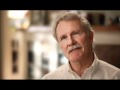
PORTLAND- Democrat veteran John Kitzhaber released his latest campaign ad featuring himself saying this year’s gubernatorial race “isn’t about being a Democrat, or being a Republican, or being an Independent. It’s about being an Oregonian.”
He goes on to say that his main job as governor is to create jobs.
“If we can’t put Oregon back to work we can’t make investment in our kids for the future,” says Kitzhaber.
He finishes by saying that he’s not just asking for a vote but also asking for help.
embedded by Embedded Video
YouTube Direkthttp://www.youtube.com/watch?v=ysY3qhxIMwc





Kitzhaber states “Its about being an Oregonian?” What? Its about massive Oregon state spending, rampant Federal deficits, and our children’s futures!
Its not about being an oregonian at all! This is simply playing to the “I was born in Oregon crowd.” This is almost the same as Obama stating “Its about being Kenyan!”
Kitzhaber is trying to establish ownership of “I am an Oregonian!”
Kitzhaber established this fact when he and Kulongoski incresed Oregon State government from $20 billion to $60 billion in 16 years.
What Kitzhaber really is, is a status quo Tax and spend Democratic Socialist Oregonian that is seeking to maintain continued Democratic Socialist rule in Oregon once again.
If being an oregonian is the most stimulating argument Kitzhaber can come up with, then think of how stimulating his arguments will be when Oregon is faced with $2.5 billion shortfalls? Will he seek to tax more Oregonians?
Sorry John, but just because you were born in Oregon does not make you the better candidate. Past is prologue and we know your history as an Oregonian. This history as an Oregonian tax and spend Democratic Socialist precludes from fooling us a 3rd time.
I am voting for Chris Dudley
Here is an article from the Chritian Science monitor about GDP.
The PERS is broke and is heading south. Presently it is funded at between 70 and 78 cents on the dollar. In order to make up constant shortfalls it is doubling costs on the employers.
The problems with Oregon State budget , as well as, the Federal Government are systemic.
If left unchanged, our children will be footing the bill. More and more taxation will fall on The Oregon and American taxpayer.
The end users of healthcare be it Medicare or a State related healthcare system, will have to start shouldering more and more of their own healthcare premium costs. They will have to make consessions.
In just a few short years, a labor force of approximately 160 million will be supporting 80 million seniors on fullride Social security, as well as, a huge medicare entitlement. We cannot continue to increase government and entitlement at the State and federal level and expect our children to be a slave to it.
The Oregon budget in the face of globalization, imports, currency devaluation, and a Federal government spending 30% of GDP is a systemic problem. Fixing these problems will require a new look. This is why I am voting for Chris Dudley.
New York
In the first look at the nation’s economic performance between March and June, the Commerce Department reported the nation’s economic performance slowed from a brisk walk in the first three months of the year to a leisurely stroll this spring.
Skip to next paragraph
Related Stories
US deficit heads toward record $1.47 trillion
Unemployment extension 101: what you need to know
Blog: Why a high tax-to-GDP rate won’t spur growth
.Gross Domestic Product, the output of all goods and services, grew at only a 2.4 percent annual pace compared to a revised 3.7 percent in the first quarter. But, inside the economic data are some trends that economists think are important in understanding what’s happening to the US economy:
Imports are surging. According to the Commerce Department, there was a 35 percent increase [[of imported of goods in the second quarter. Since consumer spending was relatively modest, most of those were capital goods purchased by businesses, says Joel Naroff of Naroff Economic Advisors in Holland, Pa.
Mr. Naroff says the big surge in imports illustrates one of the major structural shifts that has taken place in the US economy: so many domestic factories have been closed that even when economic activity perks up, businesses go abroad for their product instead of cranking up domestic production lines.
“The idea that you have job growth surge in the beginning of an economic recovery goes back to the industrial days when manufacturing shut down during downturns and then opened back up once business picked up,” says Naroff, who will testify before Congress on the economy on Tuesday. “That’s not the way the economy works these days.”
The flood of imports (not taking into account US exports) actually reduced GDP by 4 percentage points. In other words, if the US had not imported so many goods, the GDP would have grown at a 6.4 percent annual rate.
However, the US also increased exports by 1.2 percent. So, the net result on the economy was a reduction of 2.8 percent in the GDP by all the imports.
“The import numbers are an eye-opener,” says Naroff, who notes that the numbers are likely to be revised as more information comes in for subsequent GDP releases.
There are implications for a slower growth rate. One of the major implications of the report is that job growth is likely to be slower than anticipated in the months ahead. Slow demand means business can expand without adding new workers.
“We need to see economic growth on the order of 5 percent to 6 percent per quarter to help offset the loss of jobs in the last couple of years,” says Scott Brown, chief economist at Raymond James & Associates in St. Petersburg, Fla.
The slower growth rate also means state and local governments will not see a quick improvement in their budgets, says Mr. Brown. “They have some extremely tough choices to make on what taxes to impose and what services we have to have,” he says.
The slower economy may lead policy makers to look for additional ways to stimulate the economy.
“These numbers should have the Federal Reserve saying, ‘low interest rates have not done anything to boost sustainable economic growth,’ ” says Fred Dickson, chief market strategist at D.A. Davidson in Lake Oswego, Ore.
In fact, on CNBC, James Bullard, president of the St. Louis Fed and an inflation hawk, said he thought the Fed might have to start planning for “deflation,” that is the dropping of the price of goods and services. Economists consider deflation to be detrimental to the economy.
Mr. Dickson says the tighter regulatory climate has resulted in banks’ increasing their reserves and subsequently reluctant to lend money. He argues the regulators need to loosen their grip slightly. “It’s a classic case of overreaction,” says Dickson.
Any economic report from now until November will have a political tinge.
Immediately after the economic report was issued, Republicans were issuing press releases proclaiming the Obama recovery was “stalling out.”
The Republicans used the slower growth to argue that now is not the time to raise taxes. And, the head of the Republican party quoted economist Mark Zandi of Moody’s Economy.com as saying on PBS, “I would not allow those tax increases to take hold on January 1st either. I think the economy’s still too fragile for that.”
Mr. Zandi says he did indeed make those remarks but adds that he actually thinks the current Bush-era tax rates should be made permanent for those who make under $250,000 a year. For those making more than that, higher tax rates should be phased-in starting in 2012, he argues.
“I would not take any chances with tax hikes until its clear unemployment is moving down,” says Zandi, who warns, “This is an important time – if we make a mistake and go back into a recession, we could be stuck there for a long painful period.”