BY JACOB SZETO
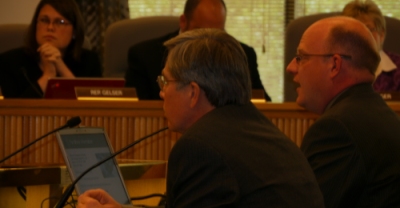
PORTLAND – TriMet approved an $858 million budget for their 2011 fiscal year Wednesday morning.
The budget includes $417 million for operations and debt service and $114 million for rail construction. The total budget was reduced by $20 million from previous projections due to drops in anticipated revenue.
TriMet had a $27 million budget gap. Federal stimulus money filled $7.25 million of the gap and the rest came from administrative cuts, salary and hiring freezes with a reduction of 120 staff, service reductions and fair increases.
Board of director, Steve Clark asked if the current or future budget provided funding for unfunded labor liabilities. Fred Hansen, General Manager of TriMet, told the board that the pension plans were being funded, but that the larger of the two plans is a “bit over 50 percent funded.” He also stated that the $632 million postemployment benefit liability is completely unfunded.
Hansen’s statements on the unfunded liabilities were followed by a comment from board member Lynn Lehrbach that he was “very concerned about the condition that the pension fund is in.”
The board also passed a series of resolutions including authorizing an application to the Federal Transit Authority for funds for the SW Moody Street and streetcar reconstruction project and two intergovernmental agreements for the construction of the Milwaukee light rail project.
One motion proposed by Lehrbach to place a six month moratorium on the purchase of properties to make way for the Milwaukee light rail project out of concern that financing might not be secured for the project, did not pass.
Clackamas County Fire Chief, Ed Kirchhofer testified on the planned Milwaukee light rail stating that there was a “current lack of a regional strategy,” and an “overreliance” on the use of urban renewal districts and tax increment financing.
Clackamas County Sherriff, Craig Roberts followed Kirchhofer and stated that the creation of an urban renewal district to help pay for new rail will “deprive” them of additional deputies while simultaneously creating an increased need for service, and would be a “mistake” for public safety.
Activist Steve Schopp, testified that from experience in Tualatin, the Clackamas County urban renewal plan to finance the Milwaukee rail plan “will not happen.” He also spoke to job losses described as being 600 displaced by 60 businesses from the rail takeover.
John Charles, President of Cascade Policy Institute, OP’s parent organization, called for an independent third-party review board for the Milwaukee light rail project similar to the one for the Columbia River Crossing. John Charles also noted TriMet’s “unsustainable” fringe benefits calling it “institutional suicide” to continue operating in such a manner noting that at least a billion dollars of liabilities are off book in their 10 year financial forecast.