
Tag Archive | "budget cuts"

Board votes to restore funding to senior and disabled programs

July 23, 2010

Tags: , , , , , , , ,


BY SARAH ROSS

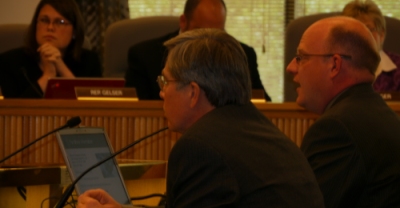
SALEM- As expected, the Legislative Emergency Board voted to restore $17.1 million in state funding to the Oregon Department of Human Services on Thursday.

In a press release sent out Thursday afternoon, Senate President Courtney, D-Salem, said, “We know it is absolutely the right thing to do to keep serving those who need help the most-especially our senior citizens and children with disabilities.”

He continued by saying that the Legislature’s priorities will “continue to be protecting Oregon’s most vulnerable and avoiding higher costs down the road.”

Senior Republican on the Emergency Board, Sen. Jackie Winters, R-Salem, said she was glad to support the funding of the programs but was concerned about the future.

“Seniors and people with disabilities are the most vulnerable in our society. Today’s actions will help for awhile but we need long term solutions to deal with these issues,” said Winters in a press release sent out by the Senate Republican office.

The programs saved by Emergency Board’s actions include the Oregon Project Independence which provides in home assistance to seniors, Medicaid In-Home Care programs, Community Mental Health programs for those covered by Medicaid, and the Developmental Disabilities Family Support Program which provides financial assistance to families raising developmentally disabled children.

Before the Board voted on providing the funding, Rep. Vicki Berger, R-Salem, cautioned the members by saying, “At some point, and maybe not today but next session, we’re going to have to take a hard look at what we didn’t give up to save these and ask ourselves the really hard questions: What are we going to have to give up in the future to save these base-level services to Oregonians?”

“These things will be back to haunt us for sure because the life boat is not getting bigger, and the needs are,” Berger added.

Most of these programs now will be covered for funding through the remainder of the 2009-2011 biennium, and the others will be covered through March 2011, giving the Board time to see what more can be done to provide funding for them.

Granting these funds, which had been cut during Governor Ted Kulongoski’s allotment process to balance the state budget, allowed the DHS to retain $14 million they had received in federal funding. If they had not received the Emergency Board’s funds, they would have become ineligible to get the promised federal funds.

“These programs rise to the point that if we do not take action, many of these programs will end up paying far more,” said Rep. Peter Buckley, D-Ashland, confirming that there will need to be action in the future, taking into account the reality of next year’s revenue forecasts.

The Emergency Board is a twenty-member, bipartisan committee which operates during the interim session to change agency budgets when the Legislature is not in session; and it has access to a legislatively appropriated emergency fund.
Legislative leaders announce intentions to restore programs cut by allotment

July 20, 2010

Tags: , , , ,


BY SARAH ROSS

SALEM- Senate President Peter Courtney, D- Salem, and House Speaker Dave Hunt, D-Clackamas County, announced on Tuesday their intentions to use the week’s Emergency Board meeting to prevent cuts to senior in-home care and services for those people with disabilities.

During the Legislative Emergency Board meeting scheduled for Thursday morning, Hunt and Courtney expect to restore $17 million of the $158 million that the Oregon Department of Human Services was required to cut as part of the governor’s allotment process.

“We simply refuse to allow elderly people to be forced out of their homes and into more expensive nursing homes,” said Hunt in Tuesday’s press release. “We refuse to allow those suffering from physical and mental illness, and their families, to fall through the cracks in the state budget caused by this global recession.”

The Emergency Board took similar action in June to prevent a budget shortfall within the Oregon University System and is scheduled to meet again in September, following the next revenue forecast in August.

Courtney added that it has been the leaders’ goal all along to protect the vulnerable and to avoid higher cuts in the future.

“These will continue to be our guiding principles as the Legislature works to find ways to meet both our responsibility to maintain a balanced budget and our moral obligation to protect Oregonians who rely on state services,” stated Courtney in the same release.

The leaders hope to restore enough funding to the DHS to protect Oregon Project Independence, Medicaid In-Home Care programs for seniors, Community Mental Health programs, and the Developmental Disabilities Family Support Program.

Committee votes to approve additional funding for University System

June 15, 2010

Tags: , ,


BY SARAH ROSS

SALEM- With Hearing Room F’s speaker phone tuned into legislators across the state who were unable to attend Tuesday’s Emergency Board meeting, the Committee voted to grant $64,762,227 to the Oregon University System (OUS).

The Emergency Board Committee is a standing committee of the legislature that meets in the interim to give emergency funds to agencies who request additional funding.

The OUS asked for just over $29 million to accommodate growth in enrollments at its schools, $11 million to help with “higher levels of externally funded research,” and $23 million to offset some of the cuts coming from the governor’s allotment process.

Specifically, the Committee voted to give the OUS $44 million for the items requested and then transfer an additional $20 million from the Capital Improvement Program Area, which is used to improve the area surrounding the Capitol but not for Capitol maintenance. This $20 million, the Legislative Fiscal Office said, is “not predicted to be needed this biennium.”

According to the Legislative Fiscal Office, the $64 million, plus increased student enrollment and higher tuition rates, will help the OUS end up with about the same ending balance before the budget cuts.

Sen. Doug Whitsett, R-Klamath Falls, asked the Legislative Fiscal Office if the OUS was in danger of losing funding from the federal stimulus program that had helped balance the state’s budget in February.

The Legislative Fiscal Office responded by saying that post secondary institutions could lose federal stimulus funding since the governor’s lower allotment would push the Universities below their 2006 level of expenditures.

The 19 members that make up the committee then voted unanimously to grant the OUS’s request for a fund increase.

TriMet claims budget situation is “bleak”

June 15, 2010

Tags: , ,


BY JACOB SZETO

PORTLAND - At a Metro work group session last week, TriMet representatives outlined their current and future budget situation, telling the Metro Council that their budget picture is “bleak” and that near-term restoration of transportation cuts is unlikely.

TriMet has continued to cut services over the last two budget cycles due to budget shortfalls. Last year’s shortfall was $31 million. This year $27 million will need to be cut from the budget.

To balance the budget, TriMet plans a five-percent administrative cut, salary and hiring freezes with a reduction of 120 staff, service reductions, fare increases and a $7.25 million federal stimulus backfill.

Over the last few years, total TriMet services have been cut about 15 percent, primarily in bus services. During the same period TriMet’s revenues have continued to grow, with 2008 operating revenues of $395 million and budgeted operating revenues for 2010 reaching $454 million, a 15 percent increase.

TriMet employee compensation has increased along with revenue. In 2008, total employee compensation was $221 million. The $244 million budgeted for this year is an 11 percent increase.

In the meeting, TriMet’s executive director of communications, Carolyn Young, described TriMet’s healthcare benefits package as “generous.” When questioned by Robert Liberty, Metro Council District 6, Young stated that they had a plan to meet the obligations created by the healthcare benefits.

However, an examination of TriMet’s latest financial forecast by Oregon Politico shows that these debts will continue to build at a rapid pace for the next decade. Oregon Politico’s analysis showed that TriMet will accumulate approximately $45 million in retiree healthcare debt annually, creating an unbalanced and unsustainable budget for at least the next ten years.

By 2019, TriMet will have accumulated $427 million in healthcare debt in addition to the $632 million already accumulated, bringing the total unpaid healthcare expenses to $1.6 billion.

Currently TriMet is involved in labor negotiations with its transit union. This contract will determine salary increases, cost of living adjustments, healthcare benefits and retirement benefits.

Proposed Allotment Reductions Available

June 10, 2010

Tags: , , , ,


BY RACHEL CHEESEMAN

SALEM - The allotment reduction strategies of Oregon’s state agencies were made available on the Department of Administrative Services website Wednesday.

The Department of Corrections reduced its budget by $52 million and will close three correctional facilities – the Mill Creek Correctional Facility and the Santiam Correctional Institution in Salem and the Powder River Correctional Facility in Baker City. In addition to layoffs, the cuts will result in the release of 966 minimum-custody inmates and the elimination of “a substantial component of the Alternative Incarceration Program.”

Nathan Allen, the Planning and Budget Administrator for the Department of Corrections, said the inmates to be released would pose very little to no risk to public safety.

“These are folks who are, in all reality, not that far from their normal release date,” he said, adding that they would go through all of the standard post-release processes.

Allen said the department began setting aside money early in the biennium, so some of those were included in the savings. Other cuts were made by restricting administrative travel and training. Allen said they wanted to preserve programs like vocational programs and drug and alcohol programs as much as possible.

“We consciously did not make reductions in those programs,” Allen said. “It’s very difficult to restore those at a later date, so we tried to preserve that infrastructure in this process.”

The Department of Education, which was asked to reduce its budget by $259 million, reduced the State School Fund allotment by about $238 million. Due to Oregon’s system of local control, the department does not have information as to how different school districts will manage this reduction in funds. That information will be made available later.

Suzanne Smith, Communications Manager for the Department of Education, said the formula for reductions is based on enrollment, so larger school districts will have larger cuts. The Portland School District, for example, will have to reduce its budget by about $19 million, while the Tillamook School District will have to reduce its budget by $821,000.

Matt Shelby, spokesperson for Portland Public Schools, said a variety of options were on the table from tapping reserve funds to layoffs and reducing the number of instructional days.

“I think when you’re talking almost $19 million, that’s a big hole to fill,” he said. “You don’t get there by simply belt-tightening at the central office. It’s going to have to take some pretty significant measures.”

Shelby also said that the fundraising activity of different schools varied widely, with more affluent districts tending to raise more money. However, one-third of the money raised went into an equity fund that could be tapped by other schools with less fundraising capacity.

Additional cuts in the Department of Education included $5 million in Pre-Kindergarten grants. The funds for the Oregon School for the Deaf were reduced by $500,000. The Blind and Visually Impaired student fund was reduced by $138,000.

To cut costs in the Department of Human Services by the necessary $158 million, various salary freezes were implemented. Benefits were increased five percent instead of nine for many employees. In addition, the Department of Human Services no longer will cover healthcare-acquired infections.

The Oregon State Hospital’s budget has been reduced by $4.8 million, and the Community Mental Health Program was reduced by $4.9 million. The department plans to limit the employment-related daycare program to save $17 million. The allotment reduction detail says that this reduces the number of families with access to the program by 4,685.

The Department of Human Services could not be reached by deadline.

Gloomy revenue forecast will force more budget cuts

May 25, 2010

Tags: , , , ,


BY RACHEL CHEESEMAN

SALEM- In response to the $560 million shortfall in Oregon’s state budget, Governor Ted Kulongoski plans to proceed with his “reset” by implementing a 9 percent budget cut across the board.

The governor said he is “not a fan of across the board cuts,” but they were the only option available, considering the magnitude of this year’s shortfall.

“I have learned – and am convinced – that in a situation like this, the best response is swift and decisive action,” Kulongoski said. “Difficult times call for difficult actions.”

The budgets for the Department of Education and the Department of Human Services will be cut by about $252 million and $154 million, respectively. In addition, the Oregon University System’s budget will be cut by about $31 million, the agency for community colleges and workforce development by about $20 million, and the Department of State Police by about $10 million.

The governor said that while many might expect him to call a special legislative session to rebalance the budget, he would not do so, saying it would be “pennywise and pound foolish.”

“The politics at this time is not conducive to people sitting down and making good policy decisions,” he said, referring to the upcoming election season.

Shortly after the governor’s announcement, Senator Ted Ferrioli, R-John Day, sent out a press release calling for a special session, saying it would be better to “do the job right with a scalpel” than let the governor cut the budget with a hatchet.

Senator Peter Courtney, D-Salem, who served in the Senate during past recessions, said that a special session would be effective only if there were more financial resources available in revenue, rather than relying almost entirely on the emergency, reserve and rainy day funds. Currently, the reserves contain about $175 million.

Rep. Dave Hunt, D-Clackamas, said more information about the impact of cuts on different agencies must be available before the allocation of reserve money can be decided.

“We have to assess the impact of these cuts and ameliorate the effects of the worst cuts,” he said.

Hunt even mentioned cutting funding for entire agencies to refocus dollars on the services they are intended to improve, naming the Commission on Children and Families specifically, which receives approximately $25 million.

“Those are the kinds of decisions we’re going to have to make,” he said.

The governor also announced that he intends to extend the pay freeze for state employees to June 2011 and asked the Public Employees Benefit Board (PEBB) to reduce its cost increases from 10 to 5 percent this year, saving about $50 million together. The governor said he hopes to “deliver savings while preserving as many jobs as possible.”

“A 9 percent cut is significant and will most certainly lead to layoffs,” Kulongoski said. “But layoffs should be the last possible alternative.”

Hunt said the legislature intends to maximize federal money and continue its “laser light focus” on job creation to minimize the negative effects of this budgetary shortfall and speed up the growth and recovery Oregon’s economy has been experiencing. While these growth rates have been a welcome change of pace for Oregon, they have not been enough to overcome the heavy blow dealt by the recent recession in the latest fiscal year.

“I think getting people back to work is the fundamental answer,” he said.